Frequently Asked Questions
The most-asked questions about carnivores and insectivores.
What do 'carnivores' and 'insectivores' actually mean as categories?
Carnivores are animals whose diet consists primarily of other animals, while insectivores are a narrower group that feeds mainly on insects and other small invertebrates. Both terms describe dietary ecology rather than a single strict taxonomic clade, though each maps onto well-known orders (Carnivora and Eulipotyphla, respectively).
Are insectivores just a type of carnivore?
Functionally, yes—eating insects is eating animal tissue, so insectivory falls under the broader umbrella of carnivorous feeding. Taxonomically, however, the order Eulipotyphla (shrews, moles, hedgehogs) is distinct from Carnivora, and the two lineages diverged roughly 100 million years ago.
What are a few iconic examples fans and newcomers often reference?
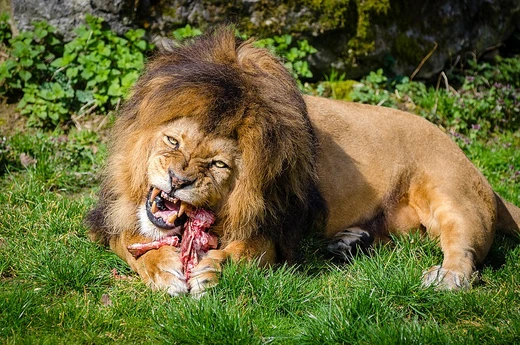
For carnivores, the lion, gray wolf, and snow leopard are the most frequently cited; for insectivores, the giant anteater, the common shrew, and the praying mantis (as an insect predator) come up most often. Each showcases a very different body plan adapted to the same broad dietary niche.
Where should a total beginner start if they want to understand both groups?
A solid entry point is a general ecology or comparative-anatomy textbook chapter on trophic levels, followed by watching a nature series that contrasts predator and prey dynamics. From there, diving into the specific orders Carnivora and Eulipotyphla gives you the taxonomic backbone.
What physical adaptations distinguish a true carnivore from an insectivore?
Carnivores typically have laterally flattened carnassial teeth built for shearing flesh and a relatively short, simple gut. Insectivores often show elongated, sticky tongues, highly reduced or absent canines, and a very rapid metabolic rate to compensate for the low caloric density of their prey.
How do the two groups differ in their ecological roles?
Carnivores usually sit at the top of food webs, regulating populations of herbivores and mesopredators. Insectivores act as critical top-down controllers of invertebrate populations, and in turn serve as prey for birds, snakes, and larger mammals, linking multiple trophic levels.
Can an animal be both a carnivore and an insectivore?
Many species blur the line; a red fox will hunt rabbits but also eats beetles and grubs, and a mongoose will take small rodents alongside lizards and insects. In practice, 'carnivore' and 'insectivore' describe dietary emphasis rather than an absolute either/or.
What is a commonly cited misconception about these groups?
A frequent mix-up is assuming that every member of the order Carnivora is an obligate meat-eater, when in fact bears, raccoons, and red pandas are largely omnivorous. Likewise, people often call a hedgehog an 'insect-eater' as if it were a distinct biological class rather than a dietary description.
What evolutionary milestone is most often highlighted in popular discussions?
The split between the Laurasian and Gondwanan faunas roughly 80–100 million years ago is a key moment, as it gave rise to the modern Carnivora in the Northern Hemisphere and the Eulipotyphla lineage in the Southern. This geographic separation explains why the two groups evolved such different skull and dental architectures.
Why do fans and enthusiasts keep returning to this topic?
The sheer structural diversity—from the 1.5-gram pygmy shrew to the 700-kilogram polar bear—makes the comparison endlessly fascinating. It also ties into broader conversations about conservation, invasive species, and how human land use reshapes predator–prey relationships worldwide.